This simple herbal remedy is inspired by Traditional Chinese Medicine to help you feel more comfortable after a holiday feast.
The holidays are a wonderful time to gather with friends and family, share delicious meals, and enjoy favorite seasonal treats. But sometimes, an extra helping of mashed potatoes, rich desserts, or a particularly large meal can leave us feeling bloated, sluggish, and uncomfortably full.
In Traditional Chinese Medicine (TCM), this type of digestive discomfort is often described as Food Stagnation.
Food Stagnation occurs when the digestive system becomes temporarily overwhelmed by the quantity or richness of the food we consume. Common symptoms include abdominal fullness, bloating, belching, reduced appetite, and a feeling that food is sitting heavily in the stomach.
In Chinese medicine, the Stomach is responsible for receiving and breaking down food, while the Spleen helps transform food into nutrients and energy. When these functions become sluggish, we may experience digestive discomfort.
Fortunately, Chinese herbal traditions offer simple ways to support digestion. Here is a warming tea to enjoy during the holiday season featuring easy to find ingredients.
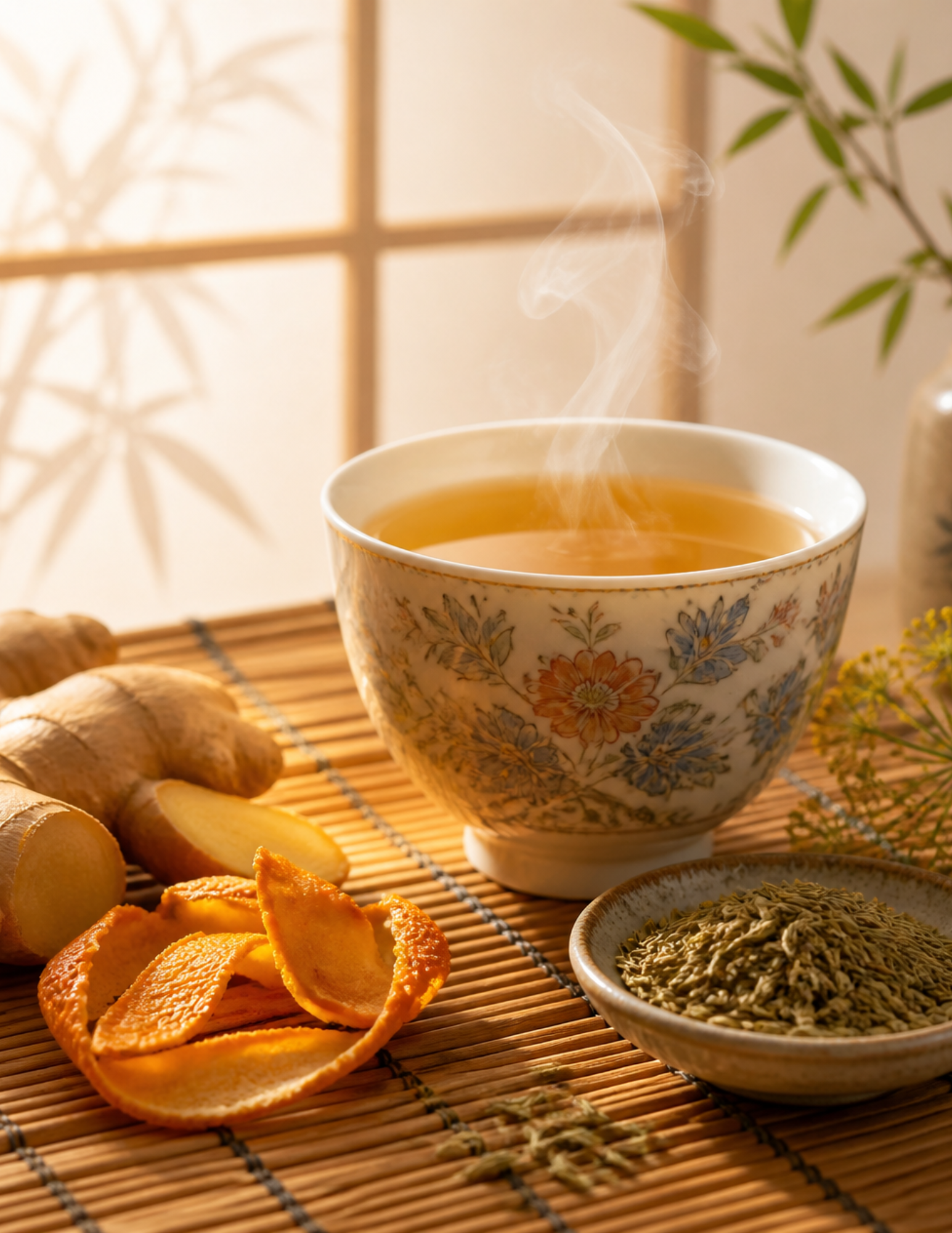
Fresh Ginger, Fennel & Orange Peel Tea
Fresh Ginger, Fennel & Orange Peel Tea
A comforting digestive tea made with ingredients from your local grocery store.
You don't need to visit a Chinese herbal pharmacy to prepare a comforting digestive tea. This aromatic blend uses familiar ingredients that are easy to find in most grocery stores.
Fresh ginger is traditionally used in Chinese medicine to warm the Middle Jiao (the digestive center), support stomach function, and ease nausea.
Fennel seeds have a long history of use in traditional herbal medicine for digestive gas and bloating. In TCM, fennel is considered warming and helps regulate Qi.
Orange peel adds a refreshing citrus aroma and echoes the traditional use of tangerine peel in Chinese herbal medicine, although fresh orange peel is not equivalent to aged Chen Pi (dried tangerine peel used in TCM herbal formulas).
Ingredients
3–4 thin slices fresh ginger
½ teaspoon fennel seeds, lightly crushed
2–3 small strips of well-washed orange peel (avoid most of the white pith)
2 cups water
Optional: ½ teaspoon honey, added after steeping
Preparation
Add the ginger, fennel seeds, and orange peel to a small saucepan.
Pour in 2 cups of water and bring to a gentle simmer.
Simmer for 8–10 minutes.
Strain into your favorite mug.
Add a little honey if desired and enjoy it warm.
TCM perspective: This combination is traditionally considered warming and Qi-moving, making it a pleasant choice when you feel cold, bloated, or sluggish after eating.
Where to find the ingredients: Fresh ginger and oranges are available in the produce section, while fennel seeds are usually found in the spice aisle.
Safety note: This tea is intended as an occasional food based beverage. Ginger may aggravate reflux in some people, and fennel should be avoided by people with known fennel or related plant allergies. Consult a healthcare professional before using concentrated herbal preparations during pregnancy or when taking medications.
A Few Additional Tips for Holiday Digestion
In addition to enjoying a warm cup of tea, a few simple habits may help you feel more comfortable after a large meal.
Take a gentle walk. Even 10–15 minutes of easy movement after eating can support normal digestion.
Eat slowly. Give your body time to recognize fullness before reaching for another serving.
Choose warm beverages. In TCM, warm drinks are traditionally favored to support digestive comfort, although cold drinks have not been shown to cause Food Stagnation.
Avoid lying down immediately after eating. Remaining upright can be particularly helpful if you experience acid reflux.
Give your digestion a little time. Allow your appetite to return naturally rather than forcing another large meal.
Supporting Digestion with Traditional Chinese Medicine
As a licensed acupuncturist with more than 20 years of clinical experience, I appreciate how Traditional Chinese Medicine encourages us to pay attention to the relationship between food, digestion, and overall well-being.
Chinese herbal medicine, acupuncture, and thoughtful dietary choices can all be incorporated into an individualized approach to digestive wellness.
While these teas have a long history of traditional use, scientific evidence for their effectiveness in treating Food Stagnation specifically remains limited. They are best viewed as comforting supportive beverages rather than treatments for digestive disease.
Occasional fullness after a holiday meal is common. However, persistent or worsening bloating, severe abdominal pain, repeated vomiting, or other unusual digestive symptoms deserve medical evaluation.
This holiday season, enjoy your favorite foods, savor the company of loved ones, and remember that a little moderation—and perhaps a warm cup of herbal tea—can go a long way toward digestive comfort.
Wishing you a healthy, happy, and delicious holiday season!
