When the weather is hot and dry, it is common to feel thirsty, overheated, tired, or simply a little depleted. Traditional Chinese Medicine (TCM) has long emphasized adjusting food and drink with the seasons. In everyday terms, that means choosing ingredients that help the body stay comfortably cool and maintain adequate fluids during hot weather.
TCM describes heat as something that can consume the body's fluids, while dryness can leave the mouth, throat, skin, and digestive system feeling less well lubricated. Foods and herbs traditionally described as cooling or moistening are therefore often incorporated into summer meals and beverages.
This does not mean these foods literally lower body temperature like ice. Rather, these terms describe their traditional energetic qualities and the way they have been used within Chinese dietary therapy. UCLA Health's Center for East-West Medicine, for example, includes pear and cucumber among cooling foods, chrysanthemum and mint among cooling teas, and pear, berries, and goji berries among foods traditionally used to moisten dryness.
The two drinks below are gentle, food-based ways to bring these seasonal principles into daily life.
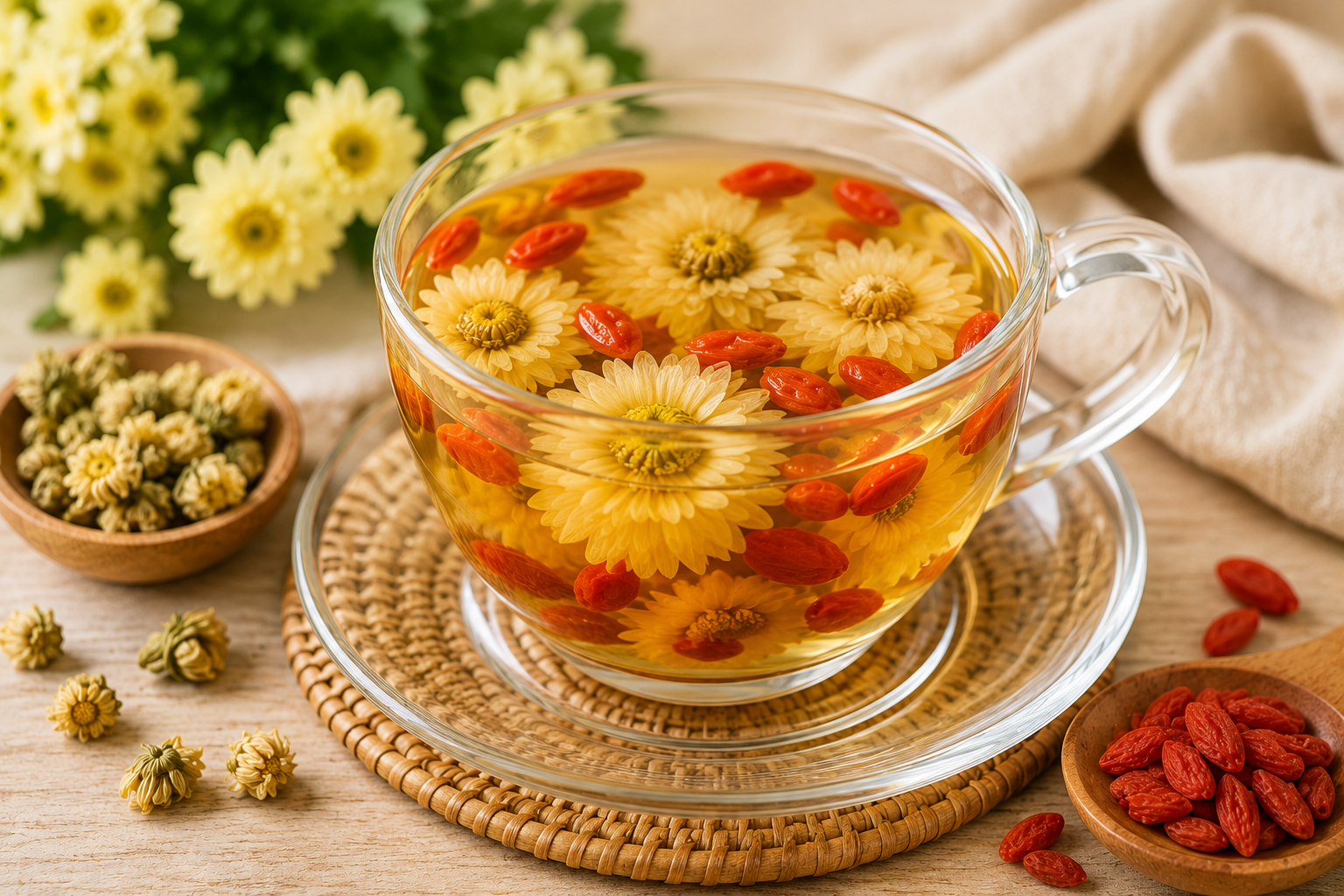
Cooling Chrysanthemum & Goji Tea
TCM principle: Clear summer heat while gently nourishing fluids and Yin.
Chrysanthemum flower, known as Ju Hua in Chinese medicine, is one of the best-known traditional Chinese herbal teas. In TCM, chrysanthemum is considered slightly cooling and is traditionally associated with clearing heat, particularly heat affecting the head and eyes.
Goji berries, or Gou Qi Zi, add a naturally mild sweetness. In Chinese medicine they are traditionally used to nourish Liver and Kidney Yin and are associated with supporting the eyes.
This makes chrysanthemum and goji a particularly nice pairing for hot, dry weather: chrysanthemum provides the cooling quality, while goji offers a more nourishing and moistening quality.
Ingredients
1 tablespoon dried chrysanthemum flowers
1 tablespoon dried goji berries
3 cups filtered water
Optional: a small amount of honey
Preparation
Place the chrysanthemum flowers and goji berries in a teapot or heat-safe glass jar. Pour hot water over them and allow the tea to steep for approximately 5–10 minutes.
The tea can be enjoyed warm, allowed to come to room temperature, or refrigerated and served cold on a hot afternoon. The softened goji berries are edible, so there is no need to discard them.
If adding honey, allow the tea to cool slightly before stirring it in.
Where Can I Find Chrysanthemum and Goji Berries?
You don't need to visit a Chinese herbal pharmacy to make this tea. Dried chrysanthemum flowers and goji berries can be purchased online or at many local Asian markets.
When purchasing chrysanthemum, look specifically for food-grade or tea-grade dried chrysanthemum flowers intended for brewing rather than ornamental chrysanthemums.
Goji berries have become widely available and can often be found in Asian markets, natural-food stores, and online.
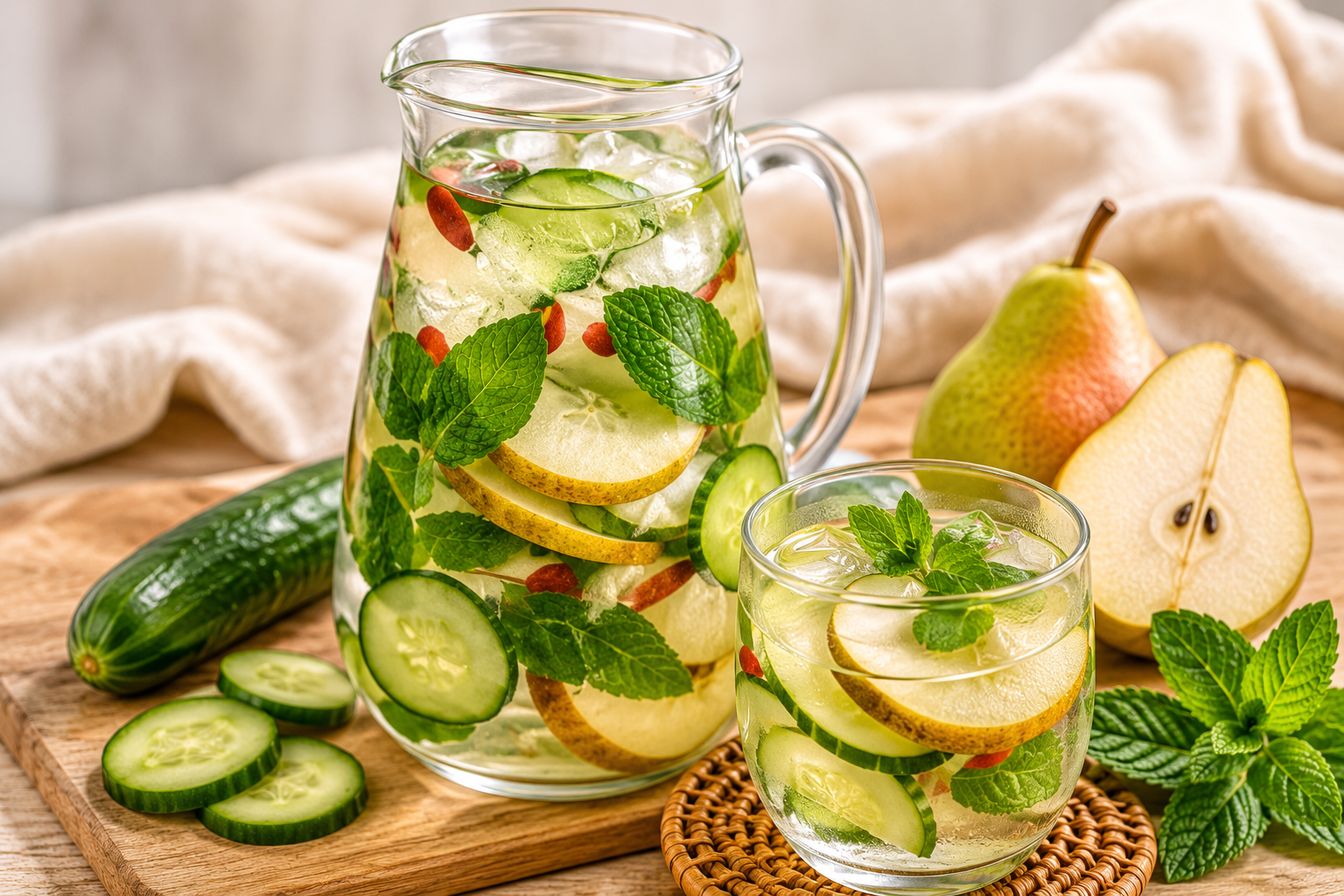
Cucumber, Pear & Mint Infusion
TCM principle: Replenish fluids, moisten dryness, and provide a refreshing counterbalance to summer heat.
This simple fruit-and-herb infusion uses familiar ingredients that fit naturally into TCM summer food therapy.
Cucumber is considered cooling and is naturally water-rich. Pear has a long history in Chinese dietary therapy and is traditionally valued for generating fluids and moistening dryness. Mint provides another cooling element while giving the water a bright, fresh flavor. Pear, cucumber, mint, and chrysanthemum are all included among cooling foods and teas in TCM-oriented dietary guidance from UCLA Health.
For someone unfamiliar with Chinese medicine, an easy way to understand this combination is to think of it as seasonal balance: when our environment is hot and dry, we can emphasize foods that are naturally fresh, juicy, light, and hydrating.
Ingredients
1/2 cucumber, thinly sliced
1/2 Asian pear or regular pear, thinly sliced
6–8 fresh mint leaves
4 cups filtered water
Optional: a few goji berries or several thin lemon slices
Preparation
Place the cucumber, pear, and mint in a glass pitcher.
Add 4 cups of cold filtered water and refrigerate for at least 2–4 hours. For a stronger fruit flavor, prepare it in the evening and allow it to infuse overnight.
Serve cool and sip throughout the day.
You can refill the pitcher with water once while the fruit and herbs are still fresh.
A TCM Approach to Summer Hydration
A TCM approach to seasonal eating doesn't have to be complicated. Often, it is simply a matter of noticing the climate, noticing how your body feels, and choosing foods that help create balance.
During hot, dry weather, water-rich fruits and vegetables, light soups, herbal teas, and simple fruit infusions can be an enjoyable way to support hydration while bringing traditional food wisdom into modern life.
And although cold drinks can feel wonderful on a hot day, TCM doesn't necessarily recommend that everything be ice-cold. The energetic quality of a food is different from its actual serving temperature. If very cold beverages leave you feeling bloated or uncomfortable, try your chrysanthemum tea warm or at room temperature and your fruit infusion pleasantly cool rather than packed with ice.
These are small adjustments, but they reflect one of my favorite principles of Chinese medicine: we don't necessarily need to fight the season—we can learn how to live in greater harmony with it.
These recipes are intended for general food and wellness education and are not a substitute for individualized medical care. Herbs and foods may not be appropriate for everyone. If you are pregnant, nursing, taking prescription medications, have significant allergies, or are managing a medical condition, consult an appropriate healthcare professional before regularly using medicinal herbs.
Rooted in ancient wisdom. Created for modern life.
