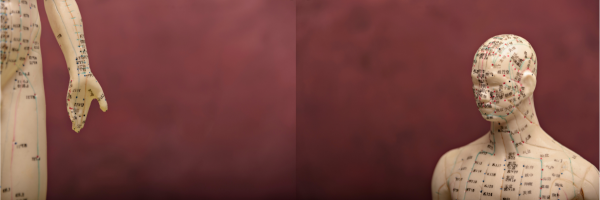
In Traditional Chinese Medicine (TCM), the body is seen as an interconnected system of energy, matter, and spirit. At the heart of this system is the concept of meridians, invisible energy pathways that circulate Qi (pronounced “chee”), or life force, throughout the body.
When people ask, "What are acupuncture meridians?" The answer lies in understanding how these channels work and why maintaining their proper flow is vital to health and wellness.
A 2,500-Year-Old Healing System
The concept of acupuncture meridians has been part of Chinese medical theory for over 2,500 years. It was first recorded in classical texts such as the Huangdi Neijing (The Yellow Emperor's Inner Classic), which remains a foundational work in TCM. Although the technology and language of healthcare have evolved, the principles behind Qi, meridians, and energetic balance remain highly relevant and effective in modern times.
What Are Acupuncture Meridians?
Acupuncture meridians are networks of energy channels that run throughout the body, connecting organs, tissues, and systems. There are 12 main meridians, each associated with a specific organ, such as the Liver, Heart, Lungs, or Kidneys. In addition to these primary meridians, there are eight extraordinary meridians that regulate and support the flow of energy within the main system.
Each meridian corresponds to a specific internal organ and follows a predictable pathway along the body’s surface. These acupuncture energy pathways are used by practitioners to diagnose and treat imbalances in the body by stimulating specific points (acupoints) along the meridians.
You may have seen an acupuncture meridian chart at a clinic or online, it shows these pathways in detail, often marked with the corresponding acupuncture points and their names or codes. These charts are essential tools in acupuncture practice, guiding needle placement to influence Qi flow in the body.
Qi Flow in the Body: Why It Matters
In TCM philosophy, Qi (pronounced “chee”) is the vital energy that sustains life. It moves continuously through the meridians, providing energy to every cell, organ, and tissue. When Qi flows freely and evenly, the body is in balance, and health is maintained. When this flow is disrupted due to physical injury, emotional stress, poor diet, or lack of sleep, or blockages, stagnation can occur.
These blockages can manifest as pain, illness, emotional disturbances, or chronic conditions. For example, if Qi is not flowing properly through the Liver meridian, a patient might experience symptoms such as irritability, menstrual irregularities, or headaches. Acupuncture works by stimulating specific points along the TCM meridians to unblock stagnant energy, restore harmony, and promote natural healing.
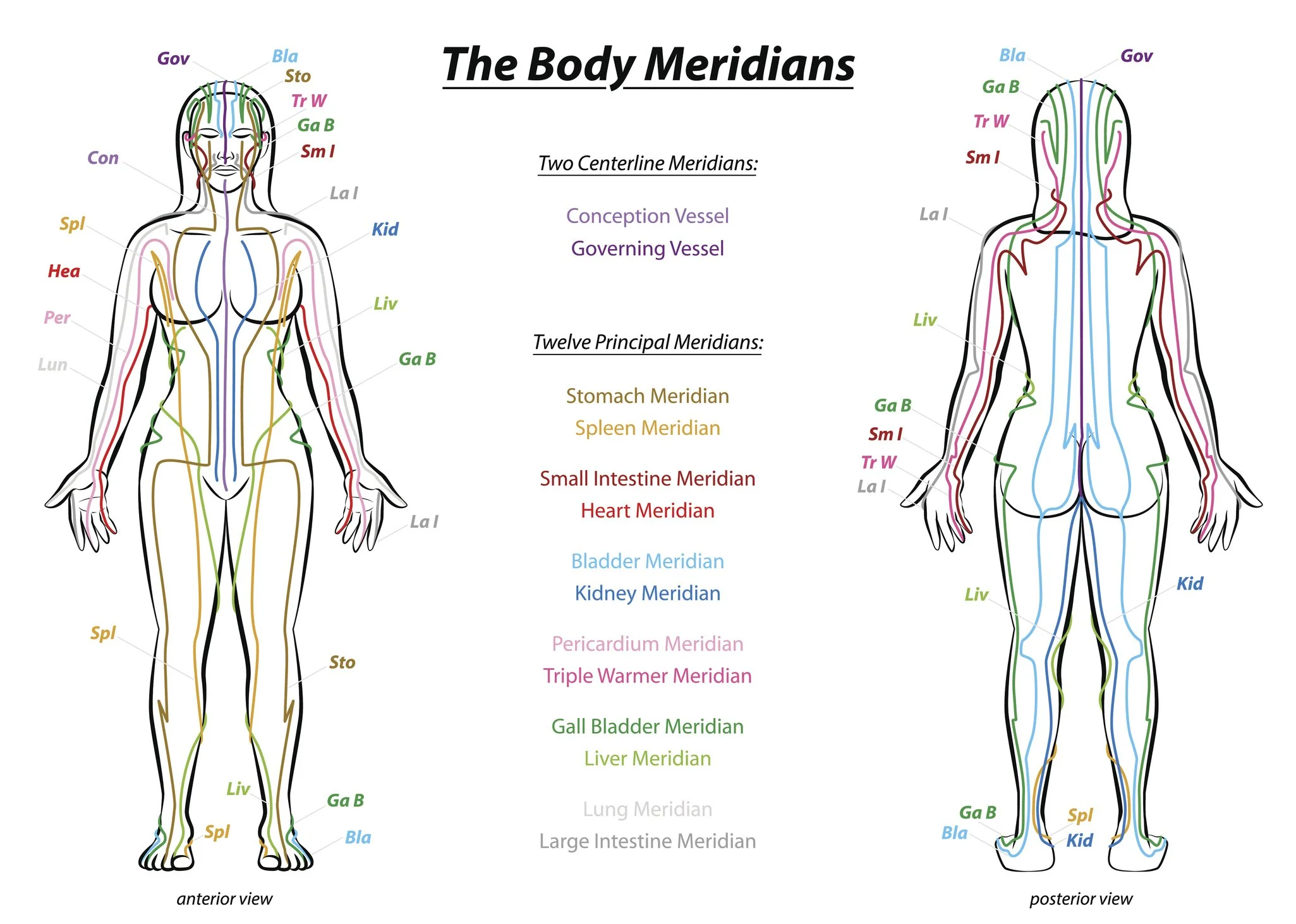
MERIDIAN SYSTEM CHART - Female body with principal and centerline acupuncture meridians - anterior and posterior view - Traditional Chinese Medicine.
Case Study: Treating Migraines Behind the Eye and Side of the Head
Patient Presentation:
A 35-year-old woman presents with chronic migraines that start behind her right eye and radiate to the side of her head. She describes the pain as throbbing and reports associated light sensitivity and stress. Migraines are worse before her menstrual cycle.
TCM Diagnosis:
Based on her symptoms and menstrual connection, a Liver Yang Rising or Liver Qi Stagnation pattern is suspected, potentially involving Gallbladder meridian disharmony.
Acupuncture Points Selected:
GB20 (Feng Chi) – Located at the base of the skull. Used to relieve headaches, dizziness, and migraines, especially those that affect the sides of the head.
Taiyang (Extra Point) – Located in the temple area, directly over the area of pain. Used for temporal headaches and eye pain.
LI4 (Hegu) – Located on the hand, this powerful point moves Qi and is used for any pain condition, especially headaches and facial pain.
LV3 (Taichong) – Located on the foot, this point harmonizes Liver Qi and is especially effective when migraines are related to hormonal fluctuations and stress.
GB14 (Yangbai) – Located above the eyebrow, this point is often used for frontal and eye-related headaches.
Yintang (Extra Point) – Located between the eyebrows. Calms the mind, helps with stress, and is often used to relieve eye strain and sinus pressure.
*Sources: Deadman, P., Al-Khafaji, M., & Baker, K. (2007). A Manual of Acupuncture., Maciocia, G. (2004). The Foundations of Chinese Medicine., Deadman et al., 2007., Maciocia, 2004., Deadman et al., 2007.
Treatment Outcome:
After weekly sessions for four weeks, the patient reports a significant decrease in migraine frequency and intensity. She no longer experiences light sensitivity and is sleeping better. Her premenstrual symptoms have also lessened.
Explore the Power of TCM Meridians for Your Health
Whether you're new to acupuncture or looking to deepen your healing journey, understanding the role of acupuncture meridians in Traditional Chinese Medicine can empower you to take better care of your body and mind. If you’re curious about how acupuncture can help you, schedule a consultation and discover how restoring the natural flow of Qi through your acupuncture meridians can support lasting wellness.
Reources
Deadman, P., Al-Khafaji, M., & Baker, K. (2007). A Manual of Acupuncture.
Maciocia, G. (2004). The Foundations of Chinese Medicine: A Comprehensive Text.
NIH National Center for Complementary and Integrative Health. (2022). Acupuncture: In Depth. https://nccih.nih.gov/health/acupuncture/introduction